In-person inspection in Kraków
We examine fineness, soldered joints and construction in our Starowiślna 6/1B atelier.
BigDIAMOND Goldsmith Atelier · Kraków
Do you have unworn, inherited or broken gold jewellery and want to reuse the precious metal in a new bespoke design? At the BigDIAMOND atelier in central Kraków, we evaluate the fineness, construction, soldered joints, gemstones, and usable mass in person. Only after a hands-on physical inspection can our master goldsmith confirm whether and how your gold can be repurposed.
Key advice: bring the complete item without attempting disassembly at home. Do not remove gemstones, solder, or clasps yourself, and never clean older jewellery with aggressive household chemicals. In our Kraków showroom, we will inspect the metal alloy, discuss sentimental elements, and explore the new form you wish to create.
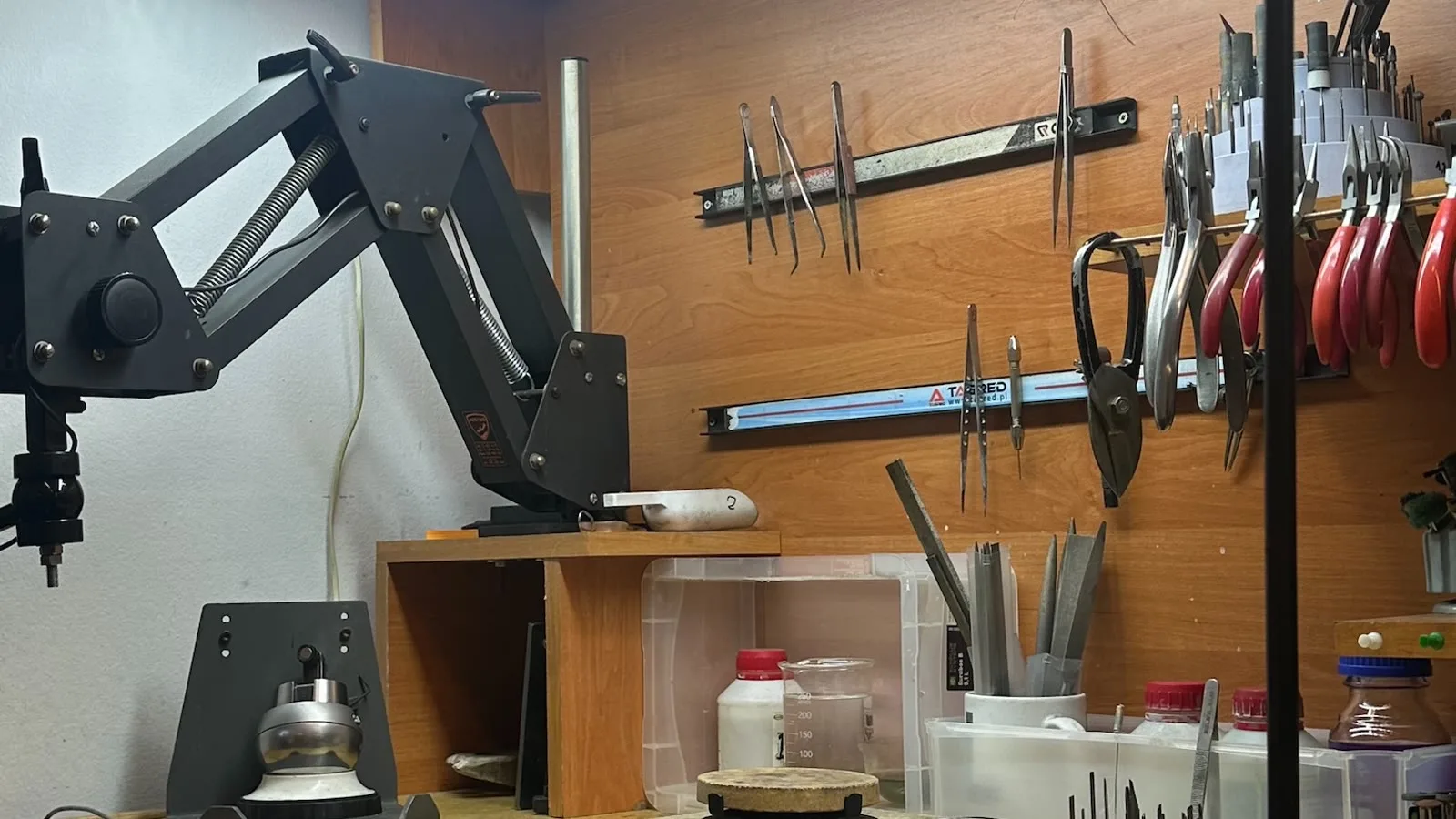
We examine fineness, soldered joints and construction in our Starowiślna 6/1B atelier.
Transform sentimental family gold into modern wedding bands, rings, pendants or signets.
Existing diamonds and gemstones are assessed individually for safe extraction and resetting.
Key Considerations
Knowing that a piece is made of gold is not enough on its own. The exact composition, structural condition, and requirements of the new bespoke design are decisive.
The goldsmith evaluates the hallmark fineness and checks whether different elements form a single consistent alloy or require separate handling.
Historical solder, earlier repairs, spring clasps, and hollow components alter how the metal behaves during melting and refining. This cannot be judged from photos alone.
Diamonds, coloured stones, enamel, springs, and non-precious components require individual assessment. Do not attempt to extract them at home.
The new bespoke jewellery must be durable, comfortable for daily wear, and feasible with the available mass. The design is finalized after physical inspection.
Inside the Atelier
Precious metal is heated under controlled conditions in a ceramic crucible. Melting is only one step in the goldsmithing process — before reaching this stage, the goldsmith must inspect the alloy and isolate non-homogeneous components.
Craftsmanship Overview
Gold remodelling involves preparing supplied precious metal for integration into a new bespoke design. It is not an automated 1:1 pouring into a mould, but a skilled artisanal process that begins with alloy assessment and structural planning.
Surface colour alone does not disclose the true alloy composition. Vintage and heirloom jewellery often contains solder alloys, reinforced clasps, steel springs, hollow shells, stones, or mixed metals from past repairs.
Different components must be evaluated separately because a finished vintage piece is not identical to uniform raw casting grain. Only after in-person inspection can we confirm whether the metal can be directly melted or requires refinement.
The new piece is conceived as an original bespoke design. The goldsmith accounts for proportions, everyday ergonomics, stone settings, and durability, confirming the technical feasibility upon physical assessment.
Feasibility
Feasibility cannot be confirmed responsibly without physically inspecting the specific item.
Factors requiring assessment include differing finenesses, past soldered joints, repair areas, hollow tubing, spring clasps, diamonds, enamel, and foreign metal pins. These elements do not mean an automatic refusal, but they explain why physical inspection is indispensable.
We deliberately do not publish an oversimplified "acceptable / unacceptable" list because qualification depends on the specific construction and intended new design. Every piece of jewellery is assessed individually on its merits.
If an item comprises multiple components of differing fineness, the goldsmith examines each part separately and explains practical options.
Gemstones, enamel, and mechanical parts require gentle handling and different thermal tolerances than the precious metal itself.
What can be created also depends on the required wall thickness, profile, ring size, and durability requirements of the new piece.
Gold Fineness & Hallmarks
Understand pure gold content across different alloys and the official Kraków District Assay Office hallmark.
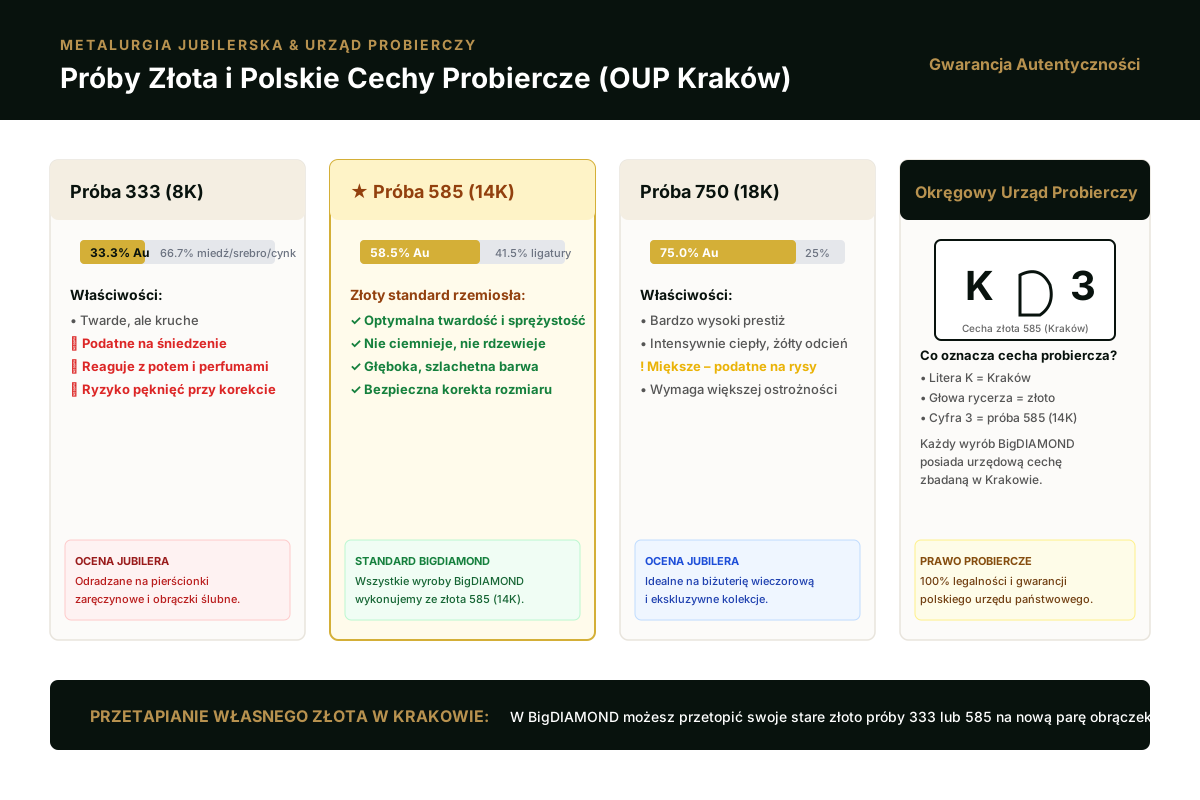
Pure gold content breakdown: 333 (33.3%), 585 (58.5% – the fine jewellery benchmark) and 750 (75.0%). Official hallmark of the District Assay Office in Kraków.
Opracowanie: BigDIAMOND Pracownia Jubilerska Kraków · ul. Starowiślna 6/1BArtisan Calculator
Enter the weight and fineness of your gold to estimate its equivalent 585 precious metal value and savings on your new bespoke piece.
Wpisz wagę starej lub zniszczonej biżuterii, aby sprawdzić, o ile obniżysz koszt nowego wyrobu lub obrączek w BigDIAMOND Kraków.
Workshop Transformation
See how unworn gold jewellery and scrap metal are transformed into seamless, polished 585 wedding bands with Comfort Fit interior.
 After: 585 Comfort Fit wedding bands
Before: Unworn jewellery and scrap gold
Inspection
An in-person physical inspection clarifies material facts and design options, separating verified properties from assumptions.
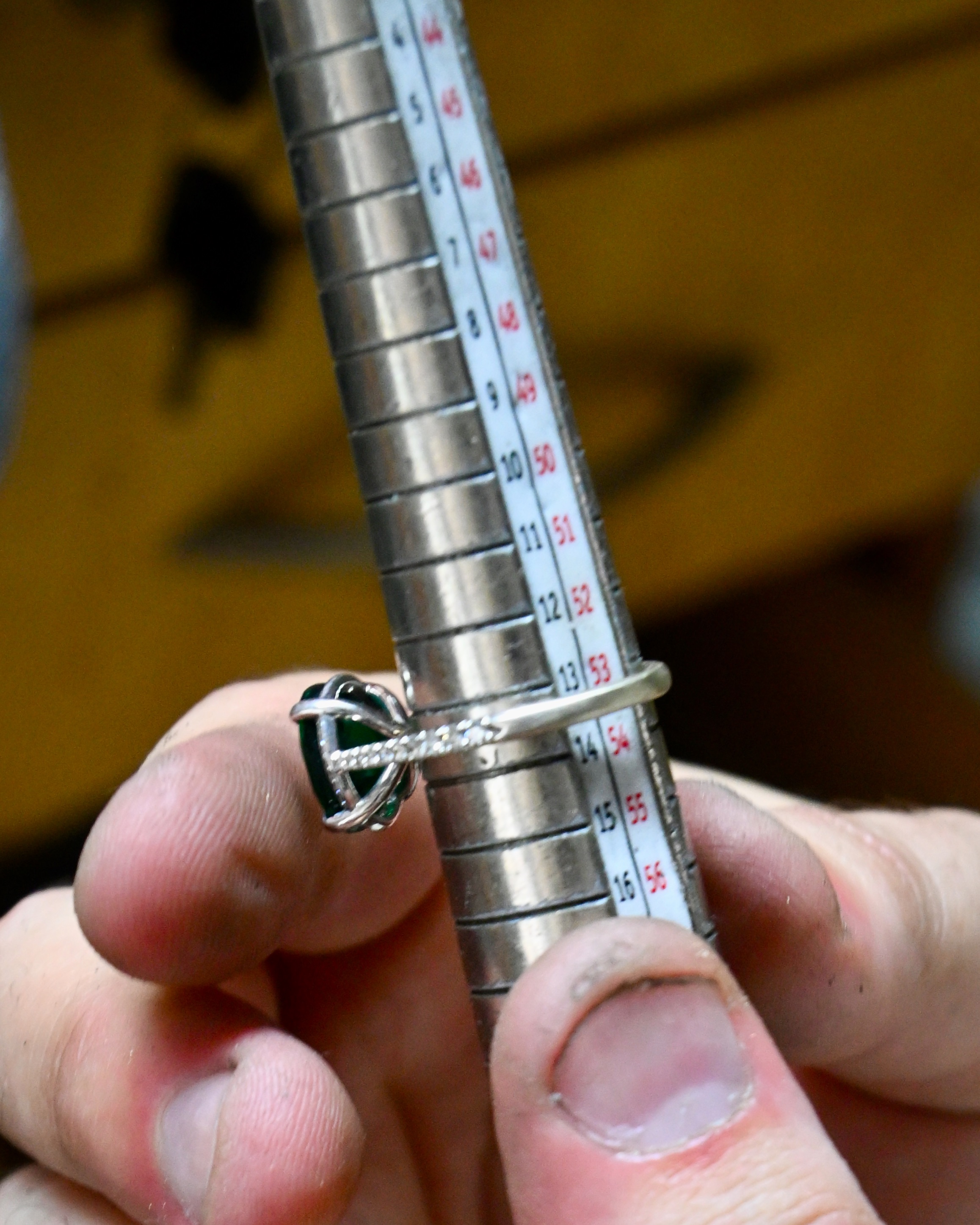
The goldsmith checks the hallmark fineness, alloy consistency, joint methods, and the presence of stones, clasps, or steel springs. Traces of historical repairs are carefully noted, as past solder can alter thermal behaviour.
Concurrently, we discuss your desired new jewellery: finger size, profile curvature, daily wear patterns, stone setting styles, and surface finishes. The material must satisfy the design requirements, and the design must respect the material constraints.
These figures determine the achievable design directions, verified precisely on precision laboratory scales.
Solder, hollow shells, clasps, and past repairs dictate how the metal must be prepared or refined.
Condition, facet integrity, and dimensions of existing stones are verified before deciding on resetting.
Step by Step
The following workflow outlines our consultation and crafting procedure at the Kraków atelier. Each material and design requires an individual approach.
Bring the complete item, including detached links, clasps, and loose stones. Do not attempt to prise stones or solder apart beforehand.
The goldsmith evaluates alloy hallmarks, separates technical fittings, and identifies parts that require special treatment.
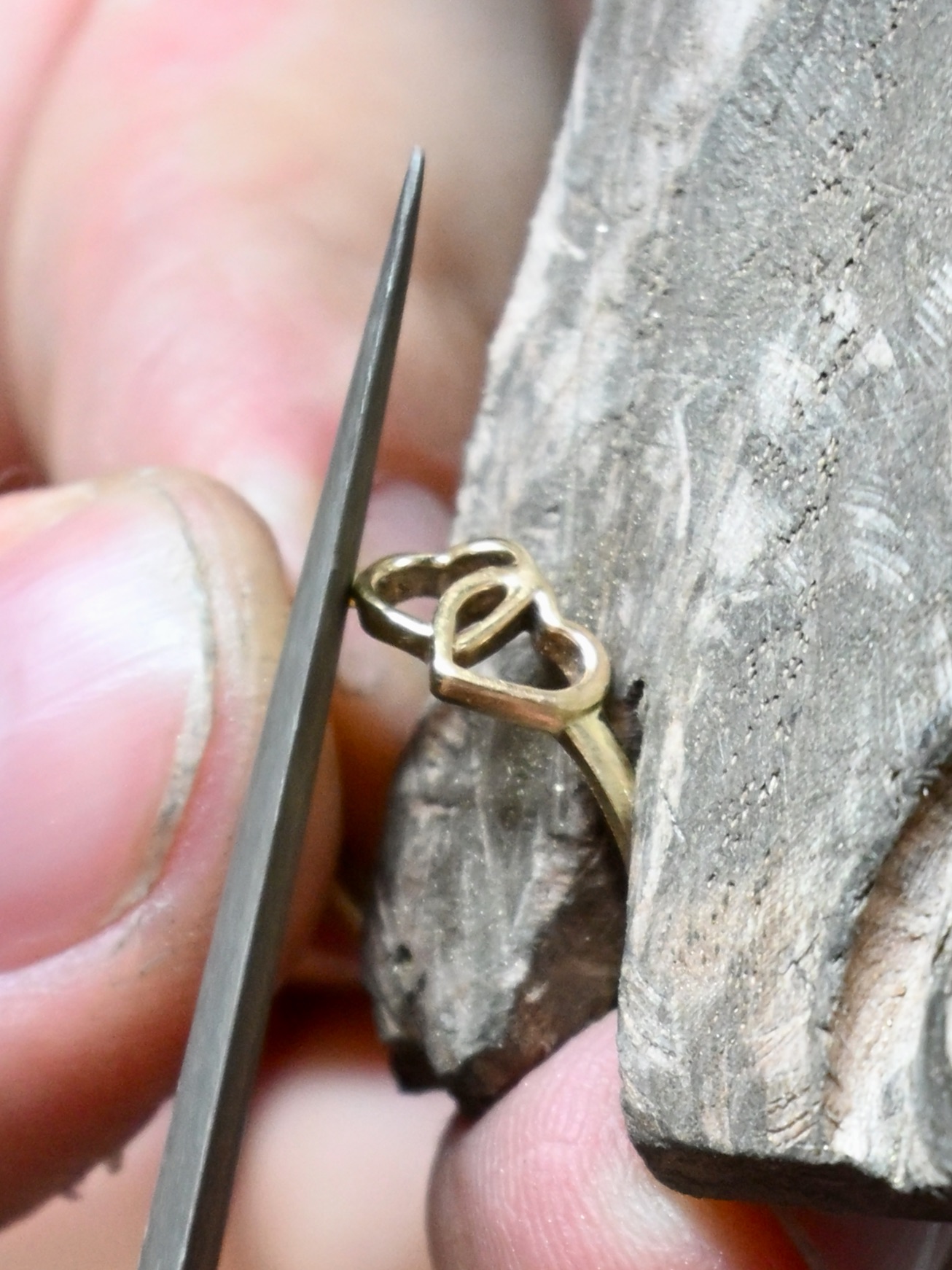
We explore whether you wish to craft wedding bands, an engagement ring, a signet, or a pendant, focusing on proportions and comfort.
The jeweller explains whether the supplied metal is sufficient for the chosen design or if alloy adjustment is needed, ensuring complete clarity.
The precious metal is melted and prepared according to the agreed specification. Short video clips on this page illustrate crucible heating.

The new piece is shaped, forged, sized, and polished by hand. Gemstones are securely set in custom-cut bezels or prongs.
The finished jewellery is inspected for structural integrity, hallmarked where required, and presented at our Starowiślna showroom with aftercare guidance.
Gemstones & Details
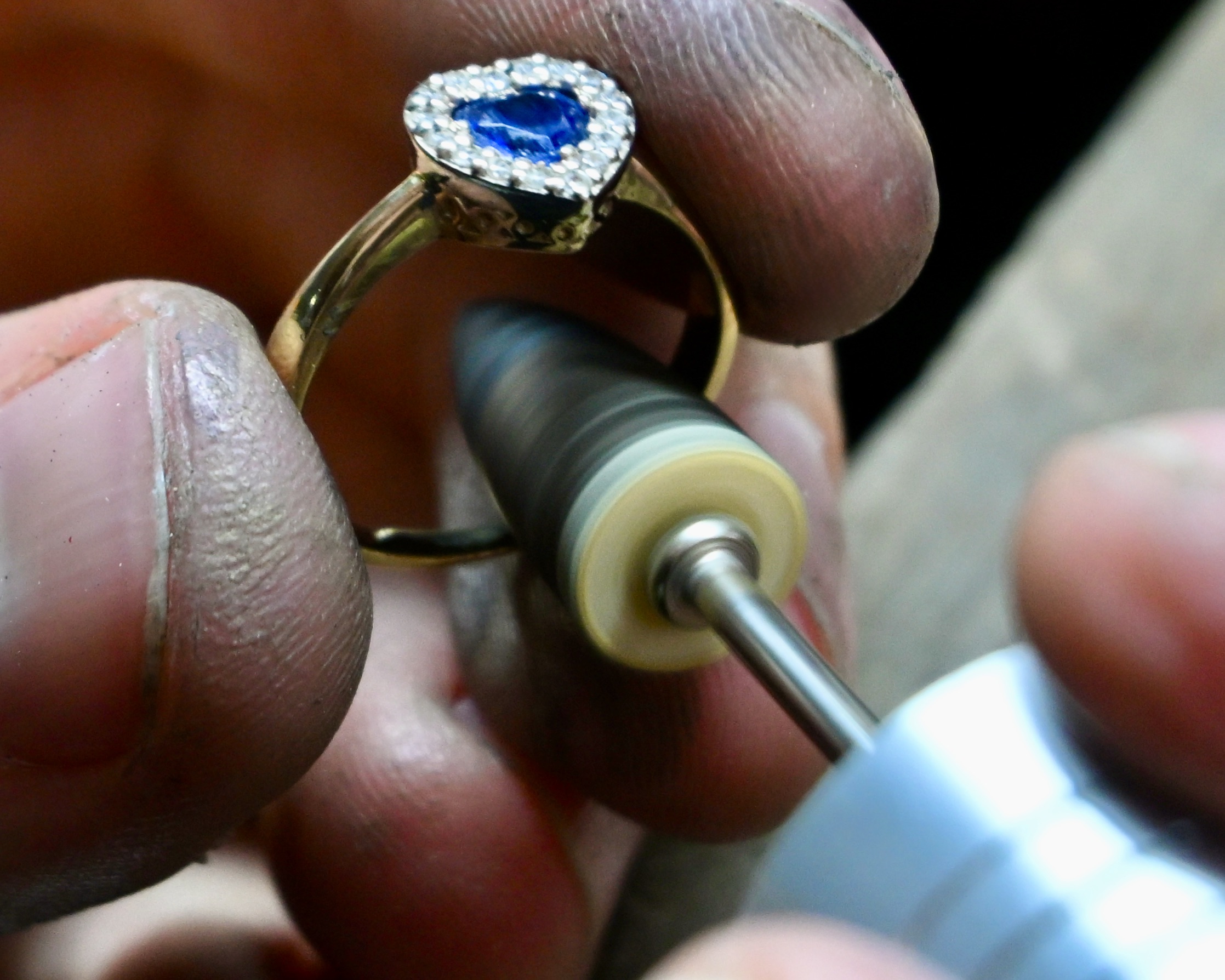
Gemstones, settings, clasps, and mechanical springs should remain intact and untouched before your consultation.
The goldsmith assesses whether stones can be extracted safely, how they are held, and whether their condition allows resetting. Carat weight, facet wear, girdle chips, and geometry all affect the new setting type.
Not every vintage gemstone is suitable for every modern setting. A delicate emerald, for example, requires protective bezels rather than high tension prongs, and some technical fittings must be replaced with fresh hallmarked precious metal.
Bending prongs with household tools risks chipping stone girdles and damaging setting seats.
Even damaged fragments provide valuable historical and metallurgical clues for the goldsmith.
Tell us about family engravings, symbolic motifs, or specific elements you wish to carry forward.
New Bespoke Creations
Most remodelling commissions focus on bespoke wedding bands, signet rings, custom pendants, or contemporary engagement rings discussed one-on-one.
Not every design can be produced from every available mass. We treat your design ideas as a tailored discussion point rather than a mechanical catalog selection.
Heirloom family gold can be repurposed into timeless wedding bands with Comfort Fit profiles, tailored to your exact finger dimensions.
Explore wedding bandsCreate a contemporary ring, pendant, or monogrammed signet ring proportioned to your style and everyday wear habits.
Learn about custom jewellerySketches, reference photos, and vintage elements serve as the foundation for an original CAD-designed creation.
View bespoke portfolioPricing & Turnaround
Scope, artisan pricing, and completion dates depend on physical material assessment and design complexity. We confirm verified figures rather than speculative estimates.
| Factor | Relevance to your commission |
|---|---|
| Material quantity & yield | Proportions, profile, finger size, and casting margins determine required mass. The available metal may be sufficient for one design direction while another requires supplemental 585 gold. |
| Craftsmanship scope & valuation | Artisan labour reflects refining, alloy preparation, 3D CAD modeling, stone setting, hand engraving, and multi-stage surface finishing. |
| Turnaround schedule | Turnaround depends on design complexity, casting schedule, stone setting, and assay office hallmarking. Precise delivery dates are confirmed upon consultation. |
Typical Scenarios
These examples reflect real consultation scenarios. Every decision begins with hands-on material examination.
Preserve the emotional significance of family rings by transferring the metal into modern wedding bands or daily-wear rings.
Old chains, single earrings, or dated items lying unworn in a drawer become the raw precious metal for a contemporary bespoke creation.
Transition from heavy ornate mountings to sleek minimalist designs that harmonise with modern lifestyles and wardrobes.
Before Your Visit
Arriving with complete items and clear design preferences makes your showroom consultation productive and enjoyable.
Kraków Showroom & Atelier
Discuss your gold remodelling project in person at the BigDIAMOND jewellery boutique and workshop at 6/1B Starowiślna Street.
BigDIAMOND / BD Katarzyna Lichwa operates at 6/1B Starowiślna Street, 31-032 Kraków (between the Main Market Square and Kazimierz).
Telephone: +48 574 470 119. Email: biuro@bigdiamond.pl.
Showroom hours: Monday to Friday 10:00–19:00, Saturday 10:00–14:00 (closed on Sundays).
Examine alloy fineness, stone settings, and ergonomic proportions directly with the master goldsmith.
A phone call answers quick logistical questions; an email lets you send photos and ideas ahead of your visit.
Explore our bespoke atelier portfolio and wedding band collection for design inspiration.
Editorial Verification
All technical information is curated and verified by the BigDIAMOND master goldsmithing team at Starowiślna 6/1B in Kraków.
FAQ
Feasibility cannot be confirmed without physical inspection. The fineness, alloy purity, historical soldered joints, mechanical parts, and requirements of the new piece all influence suitability.
This can be considered only after inspecting each component. Different finenesses (such as 333, 585, and 750) may require refining or balancing with pure gold to achieve a standardised, durable 585 alloy.
Often yes, but this cannot be assumed before examination. The goldsmith checks the stone’s facet condition, girdle integrity, cut geometry, and compatibility with the planned new setting.
No. Leave all stones, prongs, and clasps untouched. Home extraction risks fracturing the stone or deforming delicate metal needed for accurate identification.
This depends entirely on the mass of your gold and the dimensions of the intended design. The goldsmith weighs the metal on certified scales and calculates precise requirements during consultation.
Yes, heirloom gold can be melted and crafted into bespoke wedding bands. Because wedding rings require daily durability, the alloy quality is carefully tested before proceeding.
The artisan cost reflects refining, 3D CAD modeling, stone setting, hand engraving, and multi-stage polishing. Final transparent pricing is confirmed after assessing the metal and approving the design.
Turnaround depends on design complexity, casting schedules, and assay office hallmarking. A firm schedule is confirmed during your consultation.
No. Bring the jewellery in its current condition. Avoid aggressive home chemicals, ultrasonic baths, or adhesives that could complicate inspection.
Photographs provide a helpful starting point, but they cannot reveal micro-cracks, soldered joints, or alloy purity. A binding quote requires in-person examination.
Bring all jewellery components, loose links, and detached stones. Reference photos or sketches of designs you like are also very useful.
The BigDIAMOND showroom and goldsmith atelier is located at 6/1B Starowiślna Street, 31-032 Kraków. Open Monday–Friday 10:00–19:00, Saturday 10:00–14:00.
BigDIAMOND · Kraków
At BigDIAMOND in Kraków, we will inspect your jewellery, identify its components, and discuss how your precious metal can become a cherished new piece.