Stop wearing damaged jewellery
A loose stone, hairline crack, malfunctioning clasp, or sharp edge can worsen quickly under daily wear. Secure the item and detached parts in a pouch; avoid makeshift home fixes.
BigDIAMOND Goldsmith Atelier · Kraków
Damaged, loose, or heavily worn jewellery should be removed immediately and presented for professional inspection. At the BigDIAMOND atelier in Kraków, our master goldsmith evaluates construction, metal fineness, stone settings, soldered joints, and surface wear before confirming the feasible repair or restoration scope.
Never attempt home repairs, glueing, or bending claws with domestic tools. Secure the piece and all detached fragments, then bring them to our atelier at Starowiślna 6/1B in Kraków. Final scope, pricing, and turnaround require physical assessment of the specific piece.

A loose stone, hairline crack, malfunctioning clasp, or sharp edge can worsen quickly under daily wear. Secure the item and detached parts in a pouch; avoid makeshift home fixes.
Our goldsmith inspects precious metals, structural integrity, stone mounts, solder seams, previous interventions, and wear points. The solution addresses the entire piece, not merely a symptom.
Photos help in initial discussions, but definitive pricing, turnaround, and technical methods depend on the actual condition of the piece and risks to gemstones.
Item safety
Prompt action prevents losing precious stones, snapping chains, or causing permanent structural deformation.
If a gem rattles, spins, catches on clothing, or claws appear bent or worn thin, remove the piece. Pressing prongs without micro-tools can chip the stone or shear the mount.
A lobster clasp, spring ring, leverback, or safety catch that sticks, loosens, or opens unexpectedly must be serviced before further wear.
Fractures often signal material fatigue, past stress, or cold deformation. Straightening it at home complicates clean laser soldering.
Surface refinishing must match metal hardness and profile. Not every delicate engraving or antique texture should undergo aggressive rotary polishing.
With sentimental pieces, we identify which honest signs of age to preserve and which functional joints require structural reinforcement.
Inside the Atelier
This brief excerpt shows precision hand finishing at the polishing wheel. The video loads only after user interaction.
Workshop capabilities
The following areas represent typical goldsmithing services assessed at our Kraków atelier. Feasibility depends on physical structure and metallurgy.

Laser or micro-torch soldering, joint rebuilding, and clasp replacements require assessing thermal sensitivity, alloy type, and gem proximity.
Explore goldsmith workshop
Under optical magnification, we verify prongs, bezels, channel rails, and underlying wear. We never guess stone stability without visual magnification.
Enquire about inspection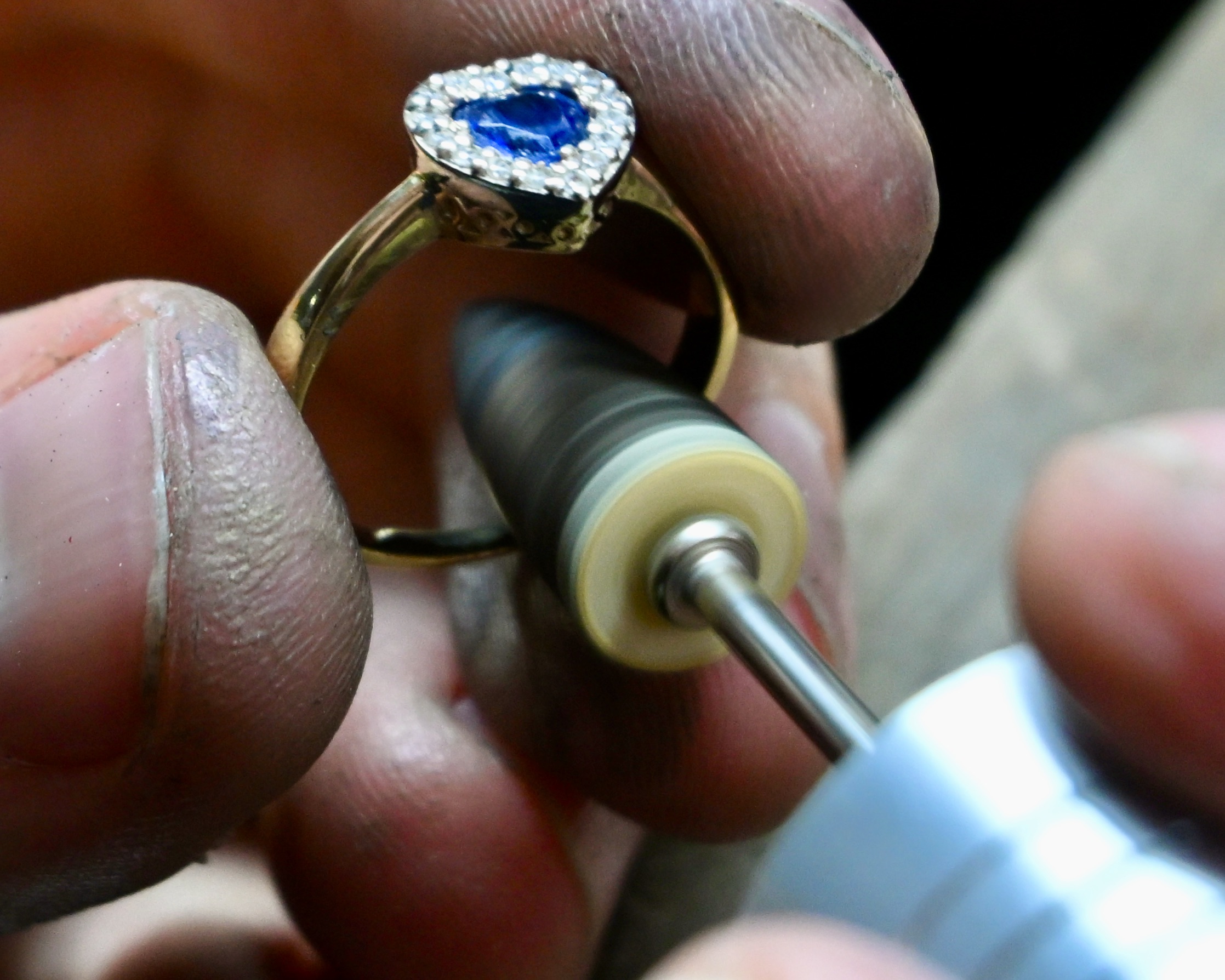
Ultrasonic cleaning, micro-scratch removal, multi-stage polishing, and rhodium plating for white gold, chosen to respect original geometry.
Diagnosis
A structured diagnostic review establishes honest technical feasibility and avoids promises that cannot be kept without physical examination.
Gold, silver, and unknown hallmarks react differently under heat. The alloy governs melting point, flux choice, solder composition, and structural strength.
Rings, wedding bands, hollow chains, and articulated bracelets have distinct stress zones and heat dispersion requirements.
Thin prongs, worn bezel edges, or fractured collets determine whether stones must be unset before high-temperature soldering.
Past lead solder, cyanoacrylate glues, or aggressive bending significantly increase technical risk and dictate our method.
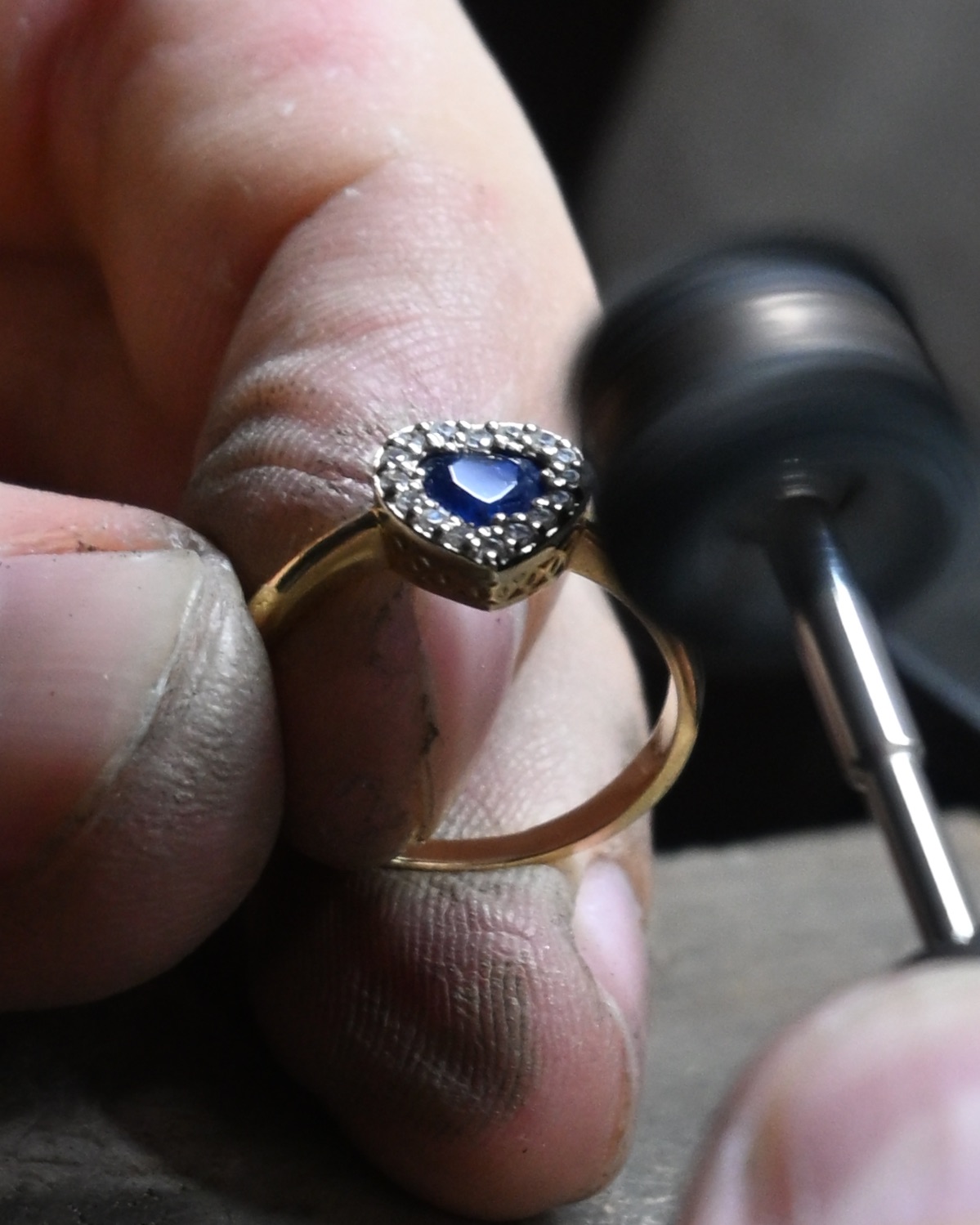
Refinishing and polishing must not compromise hallmark stamps, delicate hand-engraving, or structurally thin ring shanks.
Jewellery worn continuously during manual work or sports requires stronger mechanical reinforcement than an occasional dress ring.
For heritage heirlooms, we clarify whether the goal is pure structural stabilisation or full cosmetic restoration.
Distinct objectives
The scope of work must match the exact condition of the item and the historical details the owner wishes to preserve.
Step-by-step workflow
Our workflow is straightforward and transparent, while every bench decision is determined by the physical piece on our workbench.
Start by describing the issue and presenting the piece. Photos help initial discussions, but never replace bench inspection.
We examine not only the visible defect, but also adjacent links and stress points that could affect long-term durability.
We clarify what needs repair, what should stay untouched, and how the piece will be worn after collection.
The agreed scope moves to the workshop bench—such as laser soldering, prong re-tipping, or clasp servicing.

Ultrasonic cleaning, delicate polishing, or rhodium plating are calibrated so as not to alter fine details or gem surfaces.
Before release, we verify structural rigidity, stone stability under magnification, and finish consistency.
Upon collection, we review wear guidelines, cleaning methods, and warning signs for future inspection.
If full cosmetic restoration carries risk, we document the technical boundaries and explain why preserving integrity is paramount.
Gemstones & metals
Gemstones, settings, and alloys are not decorative afterthoughts; they define which thermal and mechanical methods are safe.
When repairing rings with diamonds or coloured gemstones, the goldsmith must assess whether the setting can safely withstand mechanical pressure or thermal soldering. Heat-sensitive gems (such as emeralds, opals, or pearls) cannot be heated with open flame torches and may require laser micro-soldering or unsetting.
With white gold jewellery, visual brilliance often relies on an electroplated rhodium layer. Rhodium plating refreshes bright white lustre, but cannot fix structural cracks, loose stones, or worn-down claws. Technical repairs must always precede cosmetic plating.
Pricing factors
A standard price list offers guidance, but cannot substitute for physical inspection of your specific jewellery.
| Factor | Impact on technical decision |
|---|---|
| Type of damage | Routine inspection, laser soldering, clasp replacement, surface refinishing, and gemstone resetting each require different bench time and tooling. |
| Alloy and fineness | Precious metal grade dictates melting temperature, solder selection, material addition, and finishing technique. |
| Gemstones and settings | The presence of heat-sensitive stones may necessitate laser soldering or temporary unsetting to prevent thermal damage. |
| Previous repair history | Old low-grade solder, adhesives, or distorted metal increase preparatory bench time and operational risk. |
| Desired outcome | Mechanical stabilisation, cosmetic scratch removal, and sentimental heirloom conservation carry different technical priorities. |
Common repair cases
Review these common situations before visiting, though every piece receives bespoke assessment.
Bring both severed ends and avoid twisting links. We examine adjacent links to ensure the entire chain remains safe.
Deformation can loosen prong tensions, even if the stone still seems held at a casual glance.
The catch must be inspected together with the immediate connecting rings bearing daily friction.
Deep gouges should not always be polished away aggressively, as this removes gold mass and alters edge geometry.
We first establish which honest signs of history to retain and which joints need structural reinforcement.
Rhodium plating restores pristine silver-white brightness, but must be paired with mechanical checks.
Remove the piece immediately and store it securely. Further wear drastically increases the risk of loss.
BigDIAMOND in Kraków
Visit the BigDIAMOND jewellery showroom and workshop in central Kraków, or contact the team before your visit.
BigDIAMOND / BD Katarzyna Lichwa is located at 6/1B Starowiślna Street, 31-032 Kraków. Telephone: +48 574 470 119. Email: biuro@bigdiamond.pl.
Opening hours are Monday to Friday 10:00–19:00 and Saturday 10:00–14:00. The showroom is closed on Sundays.
A showroom visit helps you assess scale, comfort, proportions and the condition of an existing item.
A call is useful for a short question; an email lets you include photographs and a concise brief.
Secure the item and every loose component in a pouch. Do not use glue or aggressive cleaning products before inspection. If you know the piece's history, share it with the jeweller.
Kraków · Starowiślna
The BigDIAMOND showroom and goldsmith workshop operate at 6/1B Starowiślna Street in central Kraków. You can call or send a short enquiry before visiting.
Contact: Telephone +48 574 470 119, email: biuro@bigdiamond.pl. Opening hours: Monday–Friday 10:00–19:00, Saturday 10:00–14:00. Bring the piece, detached parts, and any documentation of past work.
Sources and verification
Service scope is stated conditionally because feasibility depends on metal alloy, construction, gem thermal sensitivity, prior repairs, and owner objectives.
FAQ
Remove the jewellery immediately, store it securely in a pouch, and do not press the claws with home tools. Bring the piece for microscopic inspection before the stone is lost.
A photograph helps with an initial consultation, but cannot reveal hidden solder joints, metal fatigue, internal stresses, or hallmark fineness. Definitive pricing requires physical assessment in our Kraków workshop.
Not necessarily. The scope depends on metal wall thickness, construction, and aesthetic priorities. On heritage jewellery, removing deep marks might erase meaningful history or weaken delicate structures.
Yes, in most cases. We inspect the break point and neighbouring links under magnification. Feasibility depends on link type, wire thickness, alloy, and past repairs.
Yes. We begin by discussing whether the priority is mechanical reinforcement, gentle cleaning, or cosmetic restoration, ensuring historic character is preserved.
Rhodium plating restores brilliant surface colour and mirror lustre, but does not fix cracks, worn claws, or loose stones. Structural bench repairs must be completed before plating.
Never use adhesive on jewellery. Adhesives contaminate stone collets, decompose under heat, complicate laser soldering, and risk irreversible chemical staining to porous gemstones.
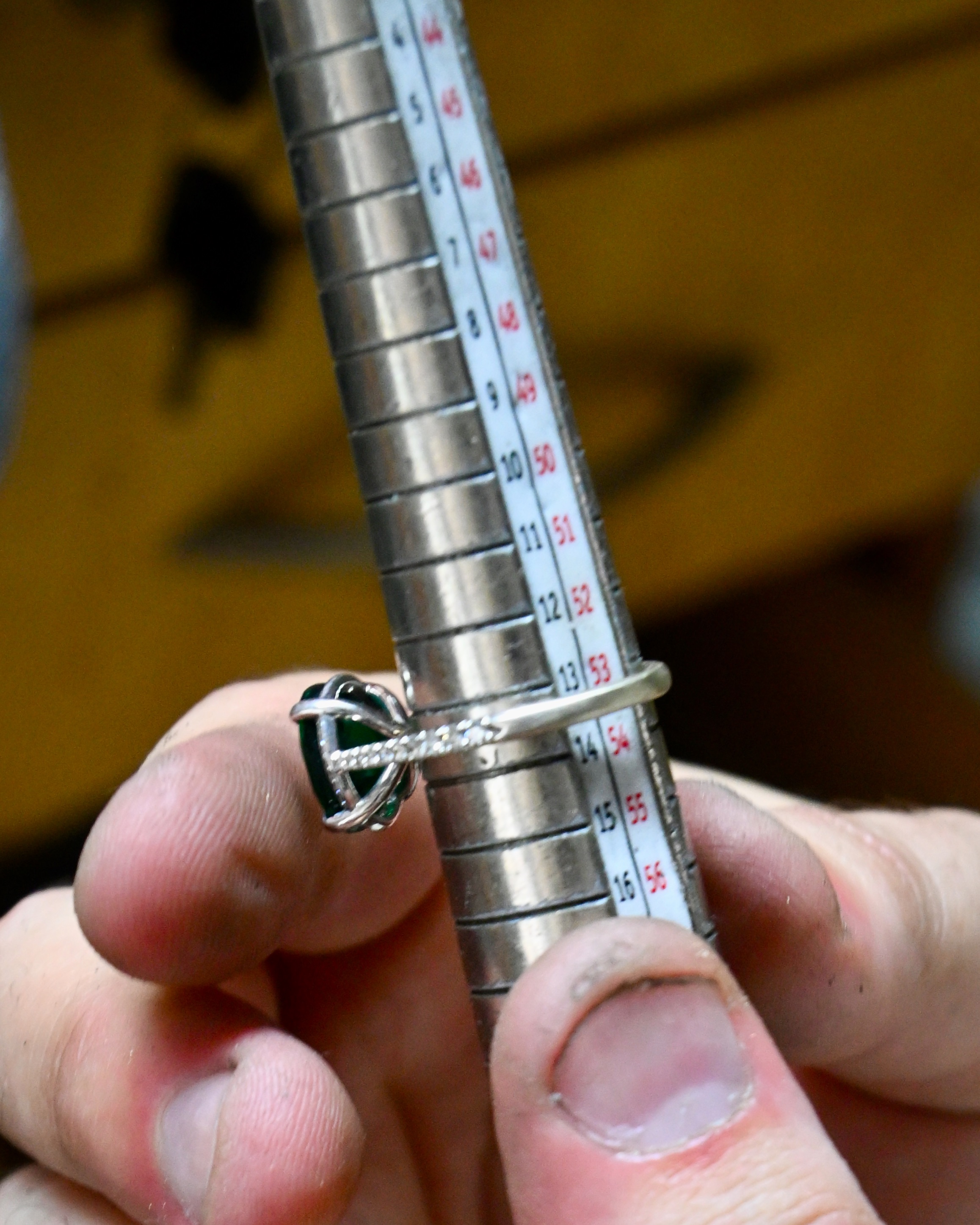
Resizing depends on ring profile, presence of channel or pavé stones, pattern continuity, and metal alloy. A physical measurement and setting review determine feasible size changes.
Not every piece should undergo heavy mechanical polishing. Filigree details, laser engravings, and antique milgrain require conservative micro-polishing to preserve fine features.
Turnaround depends on technical complexity, gemstone availability, and current atelier workload. We confirm estimated completion times upon inspecting the specific piece.
Bring the complete item, any detached fragments or stones, certificates (if applicable), and notes on previous interventions or how the issue occurred.
Yes, assessments, consultations, and goldsmith work are conducted at our dedicated atelier and showroom at 6/1B Starowiślna Street in central Kraków.
Bring your jewellery to the BigDIAMOND atelier at 6/1B Starowiślna Street, 31-032 Kraków. Opening hours are Monday–Friday 10:00–19:00, Saturday 10:00–14:00.
BigDIAMOND · Kraków
Bring your jewellery and any detached components to BigDIAMOND at 6/1B Starowiślna Street in Kraków. Following physical inspection, we will clarify condition, feasible repair scope, and the next step.